August 3, 2016

Day 80 - Crew Overlap; Rod

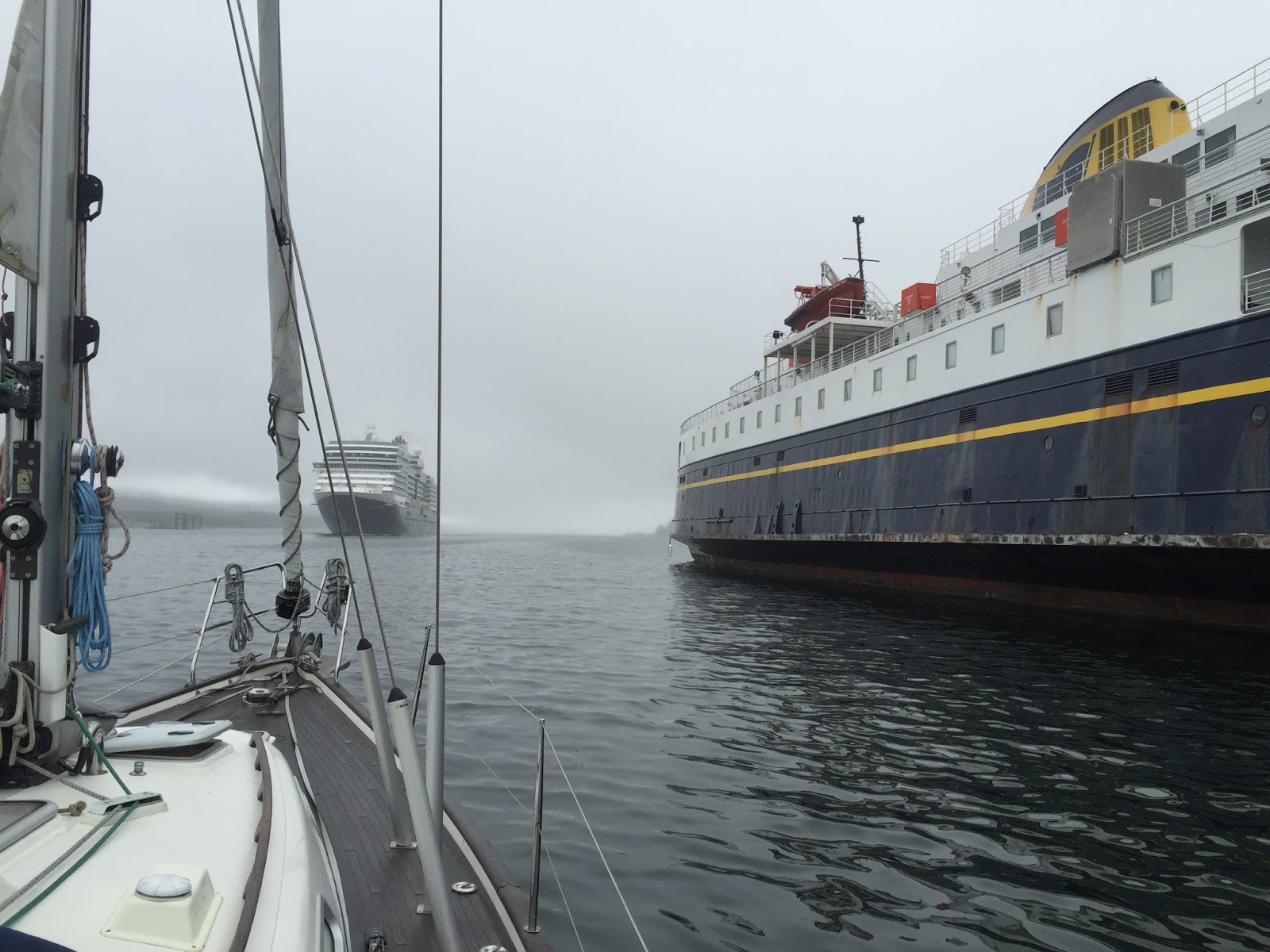
We're in Prince Rupert for a couple of nights on our way south, refilling tanks, and exchanging crew.  After a great nine day leg from Petersburg, through Ketchikan, and around the Misty Fjords, Tom, Sue, and Tina will be flying home tomorrow.  Wendy and Jerry will be with us now until we reach Shearwater.  I always enjoy the crew overlap; it's a day of chaos getting everything done, meeting up with the new and saying our fond farewells to the outgoing folks.  It's fun to have a dinner meal in town together with incoming and outgoing crew as it is usually a time filled with stories and a lot of laughs as we relive the previous couple of weeks and regale the new crew with things to look forward to.

One of the things that I've been doing on this trip is asking crew members to contribute two dinner meals a week per person.  I've asked that each of us provision, and take charge of those two meals for each week that we're on board.  I think most of the crew that have participated in this trip so far will tell you that it is a request that has been satisfied with no small amount of anxiety.  Most of that anxiety is, I suspect, a fear of the unknown.  How will it go, preparing a dinner meal for a crew of strange people on a small sail boat?  What if I crash and burn?  The anxiety created by this seemingly small request is not dampened by outgoing crews who wax eloquent about the truly amazing meals created on the previous leg.  As understandable as these concerns may be, I have to say the meals that have been enjoyed on our little voyage have been uniformly exceptional.  Everyone has put a lot of thought and preparation into what they want to do; the creative juices have flowed, and the meals have been awesome.  I'm so glad it has worked out so well and I so appreciate the effort that has gone into such good eating.  Eating well is, I think, one of the primary pleasures of (cruising) life.

Overlapping crew has created some sleeping challenges as well.  We have seven overlapping crew tonight.  When we were in Wrangell, we had eight crew for one night of overlap.  In that case, Frederic graciously volunteered to sleep on seat cushions laid end to end on the floor.  Tonight we're making use of a hotel room.  Thankfully everyone has been flexible and maintained a spirit of doing what it takes to make things happen.  Thanks guys!

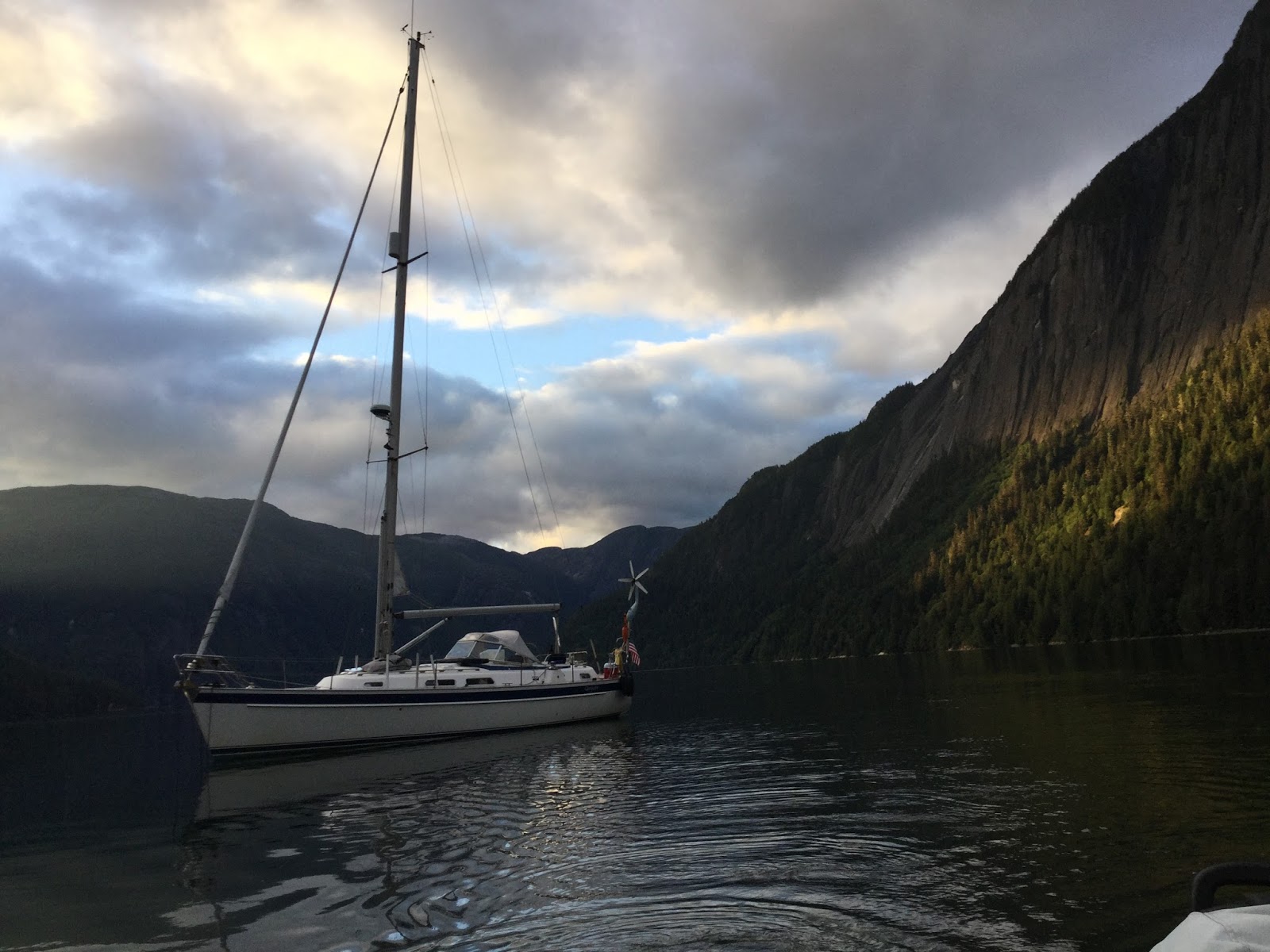
I'll wrap this post up with a few of the many photos that Sue sent me.  She took them over the last week and a half; including Petersburg, Ketchikan, Prince Rupert and the Misty Fjords.  At some point I think we'll try to put a Drop Box together that will give us a place to share our best images of the voyage up the Inside Passage to Glacier Bay on SV Quijote.


Petersburg


Ketchikan


Green Island


Prince Rupert

Misty Fjords

Day n - A mathless look at tides and currents; Rod

If you ever find yourself asking how something works or why something behaves as it does, there's a good chance you are, or could have been, a scientist of some kind. I have an academic background in physics, so I have a fondness for observing oscillations in natural phenomena. When I can't understand something physical it becomes food for thought.

Such was the case when observing that the predicted time for slack current though the Chatham Narrows was two hours after low tide. That's the kind of thing that sits in my brain and bugs me. Oscillations generally come to rest at the highest and lowest points, like springs or pendulums do. Yet here is a current that continues to flow for two hours after low tide. How is that possible?

The introductory material to most reading on the subject of tides in the area will tell you that there is a lot of river outflow that reduces the predictability of tides, but that explanation doesn't satisfy me. Two hours feels like too much to be explained by river outflow.

Lying in bed on the morning we were to leave for the narrows, I had an epiphany: Imagine we have a current station at each end of the narrows and we can generate tide charts for each station (Figure 1). If the water flow supplying each end is different, then high and low tide will arrive at different times. When the tide is higher at one end than it is at the other, current will flow. When the two tides are equal, we have slack.

In Figure 2 we see the green areas where the tide is higher at station B than it is at station A - current flows from B to A; and the orange areas where where the tide is higher at station A than it is at B - current flows from A to B. Where the lines cross, the tides are equal and the current is slack.

If you look at the timing of these events though, the time from high tide to low tide is roughly six hours, so high tide to slack is less than an hour. Something else is at work that explains how the time from high tide to slack can be two hours.

Then it occurred to me that better flow to one station and diminished flow to the other can mean more than a difference in timing of the tides; it can also mean higher or lower tidal swings. Figure 3 shows what happens when one station has smaller tidal swings than the other. The effect is to increase the currents and delay the onset of slack. With that we finally see slack current that has been delayed by about two hours.

As the Greeks would say: Quad Erat Demonstrandum (QED); and all without math, which should leave Tom feeling a little unsatisfied.


Day 79 - Miles to go; Rod

We enjoyed a great hike in Punchbowl Cove today. It was advertised as a muddy scramble to a lake and it was definitely all of that with a slippery, moss covered boardwalk thrown in for good measure. The payoff, aside from the heart pumping exercise and the beautiful trail through lush, mossy forest, was a gorgeous freshwater lake beneath towering cliffs. The trail was reported to have a lot of bear activity, so it was fun to think of creative ways to make a lot of noise while hiking. Thankfully we saw plenty of scat, but no bears. With all the noise we were making there was probably not a bear within ten country miles.

Returning to the boat, we pulled up the anchor and headed around the corner from the cove to see a bird rookery and check out a scramble route to a ridge that our buddy John H told us about.

The rookery turned out to be a verdant cliff towering over the the water, covered in moss and shrubbery, and dotted with nesting sea birds. It was an active, cacophonous community. We drifted below the maelstrom for a short time and imagined what it would be like to live among them, perched in a small indentation in the cliff face, looking out over the sea and protecting our young.

The scramble route around the corner to the rookery looked inviting. With another day to tarry, we'd have loved to find our way to the top. As it was, we were compelled to make our way out of the inlet and get going to the next anchorage. We have flights to keep and miles to go before we sleep.


Photos above by Rod; Photo below by Sue


Day 78 - Breakfast on Quijote; Rod

Morning is a favorite time; it's calm, peaceful, introspective. Sea birds pass by; the tips of their wings tap the glassy surface of the water leaving a line of expanding rings. Cloud puffs traverse the forested hillsides along the passages. Bright silver threads of sunlight wander through the overcast as the morning matures. We're surrounded by rippled reflections of hills and sky. A crisp morning breeze created by our motion caresses our skin and chills the fingers, compelling us to zip up jackets and put hands in pockets. The smooth hum of the engine pushes us onward as the dinghy rustling and slapping, endeavors to keep up.

Tina digs fruit out of the cooler for breakfast. Kay studies the day's chart leading to Punchbowl Cove in Misty Fjords National Monument. Sue, Tom and I watch the water ahead for hazards, warming our hands on tea mugs. The crew is quiet and reflective.

Breakfasts on board Quijote are occasionally elaborate - eggs, or pancakes - but for the most part they are simple, consisting of oats, cream of wheat, or Kay's home made granola. We pile on a lot of fruit, usually some combination of apples, peaches, or berries. We'll add raisins or dried cranberries, sprinkle on walnuts, pecans, or pumpkin seeds. Some of us will sweeten the concoction with brown sugar, honey, or maple syrup and top it all off with a large dollop of creamy Greek yogurt. Mingled with taste buds on a pristine morning in Southeast Alaska and it's a perfect way to start the day.


Photos by Sue

Day 77 - When is a trail not a trail? ; Rod

The first of two anchorages in Yes Bay were occupied by a junk barge full of derelict motor boats and a motor-cruiser from Anacortes, so we made our way deeper into the bay and found the seclusion and pristine scenery we sought near the head.

While Sue made up a curry, veggie, tofu masterpiece for dinner, Tina and I headed out in the dinghy to find a trail reported to be in the bay by the US Forest Service. We found pink flagging where we expected the trail to be, and even a light trail of sorts, but it was so log strewn, overgrown and muddy as to be all but impassable. That's saying rather a lot coming from this quarter. Trail or not a trail?

Yes Bay


Photos by Rod

Day 75 - Winds Made Good; Rod

Finally a day of wind and weather suitable for sailing. We left Ketchikan this morning at a reasonable hour and headed up Behm Canal for the first day of our circumnavigation of Revillagigedo Island. The clouds over Ketchikan were so low that the constant stream of float planes entering and exiting the city were practically skimming over the water to maintain (sort of) visual flight rules.

As we proceeded further from town, the clouds began to lift until we found ourselves winding through the small islands of Clover Passage under partly cloudy skies and occasional sun breaks. From there the day only got better.

The thing about winds that turn to follow and build to something worthy of sailing in is that they sneak up on you unnoticed. The winds hide themselves in the boat speed. It had been so long since we've seen good sailing weather that I almost didn't recognize the sunshine, let alone the following wind. Finally Tina noticed it and wondered out loud if we should be sailing. Damn straight! We shook out the sails and cut the engine. What fun! What a relief to be making way without the engine. The sailing and sunshine lasted most of the afternoon - definitely a good day.

Tofu Curry by Sue


Chicken Tacos by Tom


Photos above by Rod; Photos below by Tina


July 27, 2016

Day 74 - Southeast Alaskan Balderdashery; Rod

Wet, wet, wet. Windy and wet. Wind in the wrong direction, soggy, and wet. As much as it grieves me to report less than ideal conditions, today's primary silver lining was in the safe and successful voyage from one anchorage to the next. Alas, that is hardly anything to gush about.

Sure - the anchorage is beautiful. It's scenic, remote and we have it to ourselves. During the day the forest covered hills were shrouded in ancient, primeval looking misty tendrils of low clouds and fog. As we slid along the coast of Prince of Wales Island, purse seiners and fishing trawlers occasionally emerged out of the mist like ghosts from the past telling stories of hardscrabble lives at sea.

But as breathtaking as today was, it was a beauty we have come to expect. We're like wizened veterans of life in a remote cottage perched above the sea, hardly noticing the grandeur that abounds.

OK, I'll admit, that was a suit I was trying on more for the curiosity of fit than for the style. And I'll confess it feels a little tight under the arms. I guess we'll stay a little longer and see where tomorrow's fashion takes us.

If all goes according to plan, tomorrow we'll head in to Ketchikan for hot showers, a nice restaurant, blog uploads and full tanks.  In the words of Timbuck Three: "The future's so bright we gotta wear shades." And foulies.


Day 73 - A Whale of an Ovation; Rod

The boat is abuzz with animated discussion of the days whale watching activity. Arriving at the anchorage late in the day at high water slack, we were greeted by a pod of wales blowing and breaching - not a bad start for our new crew. One energetic whale with a flare for showing off obliged his gaping audience by throwing himself into the air in a rotating half-gainer a mere fifty yards from the boat. Bravo!

We started the day with a southbound transit of the Wrangell Narrows. While I steered the boat through a maze of navigation aids, Tom glassed the buoy numbers and Sue recorded them in a log and followed our progress on the paper chart. We timed our passage more for our arrival at tonight's bay than for the direction of the current through the narrows, so we were headed against it for most of the day. We were bucking three knots at one point.

On arrival at the anchorage, Sue went straight to work cooking thick slabs of fresh halibut on the barbecue. Encore!

July 25, 2016

Day 72 - Fishy Business; Rod

Quijote is once again rocking with new crew. Tom, Tina, Sue, Kay and I are hard at work, provisioning for the coming leg and getting reacquainted with life on the boat. We leave tomorrow for a nine day segment that includes a one night stop in Ketchikan and several days to circumnavigate Revillagigedo Island through the so called Misty Fjords.

One treat that we've (re)discovered in our time here in Petersburg is the availability of fresh seafood. Petersburg doesn't cater to tourists as much as some of the places we've stopped, especially the places where the cruise ships stop. That makes it nicer to explore and makes us stand out as the fresh off the boat tourists that we are.

Before leaving for the break we noticed a small business in town that sells, packages, and ships flash frozen seafood. We also ate at a small restaurant with picnic tables out front that specialized in king salmon, rockfish, and prawns. Now that we're back in town, we're taking advantage of both establishments: We had dinner at the restaurant last night; Tom bought king salmon for the barbie tonight; Sue will do halibut tomorrow night, and Tina will make a curry prawn dish the following night night. Awesome crew!

It rained most of the day today, so it was a good day to take care of stuff around town. Tomorrow, with the weather predicted to improve, we'll start heading south and anchor in Red Bay; an anchorage that recommends slack water and high tide to get in and out of, so we'll be leaving town at a leisurely hour tomorrow.

The crew is eager to get going though, so with luck I won't have to tie anyone to the mast to settle them down before we get under way.

Apologies for the paucity of photos - I get many requests for more photos, and we’ve taken a few, but there is honestly not many options for getting them up onto the cloud.  Ketchikan has a big Safeway with reasonable wifi, so I’m hoping we’ll get a chance to upload a few when we arrive there in a few days.


July 13, 2016

Sketches by Vi 


July 12, 2016

Day 58 - Quijote takes a break; Rod

We arrived in Petersburg yesterday and have been taking care of all the normal business of cleaning and refilling for the next leg. Petersburg is a lovely little fishing town and we've hit it in perfect weather. The nice thing about this stop is that we are going to take a short two week break. Vi will fly home, Kay will meet up with her son Chris, and I'll head back to Seattle for a couple weeks. The tough thing about doing a summer long trip like this, as much as I'm loving it: it doesn't leave time for the other things I like to do with my summer. This break is a small compromise toward that need. I'm missing the Cascade trails and Seattle tennis courts.

So today I fly out and this blog will take a two week break as well. When we resume on July 25th, Tina, Sue (Bob's SO), and Tom (a friend of Tina's family) will be joining us. We can look forward to winding our way down the infamous Wrangell Narrows toward Ketchikan, Then up around Revillagigedo Island and into the Misty Fjords before returning to Canada via Prince Rupert. It promises to be a spectacular leg.

Until then…

(I'll post a few pics when I get home and have better wifi throughput.)

Day 57 - Cannon Fire on Frederick Sound; Rod

Today was another whale watching day. Vi has a list of things she wants to see while she's with us. The Aurora Borealis and breaching whales had yet to be "ticked off" the list. Both were looking rather doubtful this morning as we plodded along under leaden skies, too far from shore to see much of anything.

We'll need three things to see the Northern Lights: dark skies, clear skies, and well… an active Aurora. I read something that said the best time to see one is late summer or early fall. That might have nothing to do with the phenomenon itself and everything to do with the first two of those three requirements: earlier and it's not dark enough; later and it's not clear enough. In our case we see neither clears skies nor dark skies. So… that's not an item that Vi is likely to be able to tick off her list, on this trip anyway.

As for the breaching whales, all that was needed was a little luck. We've seen plenty of whales, blowing and rolling their tails out of the water, but none that were breaching on this leg - until today.

Shortly before heading into Portage Bay for the night's anchorage, Kay spotted blows on the other side of the sound. This was the same place that Frederic, Marta, Lavanya and Jason had seen some with us as we exited Read Island Cove three weeks earlier. As we did then, we decided to cut the engine and drift a while to see what happened; a lot as it turned out.

The experience was a lot like watching icebergs calve in the sense that we were scanning a large area watching for something to happen in the mist of a lot of sound and activity. From roughly a mile away to the closest individuals, we kept our eyes on dozens of blowing, rolling breathing whales, all up and down the channel. The sound and sight of all that activity with no one else around, was surreal.

Then, once every so often, one of them would come surging up, its entire massive body clearing the water before crashing down again with a thunderous roar that we could hear from miles away. Some were so far away that we couldn't see them through the afternoon haze, but we could hear them; the sound carried easily across the water like cannon fire. Some were much closer; one surprised us, breaching a hundred yards from the boat. Another rolled it's back out of the water within a hundred feet - close enough that Kay started banging the hull to make it aware of our presence. Close was way cool, but too close could be dangerous for it and us, so we tried to keep our distance.

In all we watched the show for a couple hours and Vi got to tick breaching whales off her list. Now if the skies would just clear and the night would get dark for a change.

Day 56 - Waterfalls and Swimming Grizzlies; Rod

We enjoyed a routine day under way today, a rather short 30 miles in two foot chop with a 12kt wind on the nose. We plodded south down Chatham Straight, around the corner and into Frederick Sound. We were back where we were two weeks ago after a circumnavigation of Admiralty and Chicagof Islands, the A and C in the ABC Islands. It occurs to me that a worthwhile future objective might be an ABC circumnavigation, adding Baranof to the mix.

After a cloudy, blustery, choppy morning, the weather and the waves settled and we enjoyed another gorgeous afternoon. We pulled into Chapin Bay around 1pm and set out to do some beach walking.

The chart says the bay has been used for log storage, but it's empty of any such use now. In fact the bay is pristine and looks like it might have a thousand years ago, though perhaps the trees were older growth at that time. In any case, it just us, the trees, and ample numbers of deer flies and jelly fish.

The bay is a long one so it was good for a sorely needed three mile or so round trip leg stretcher. Now Kay and Vi are out scrubbing the hull with a boat brush and laughing themselves into hysterics (I won't ask.)

We play a game now and then trying to remember the names of the coves we've been to in order. It occurred to us that if we had given each place a nick name that might have provided clues that would have made each location more easily recalled. Perhaps this would be Boat Brush Bay.

Last night we gathered wine, cups, and cameras and motored the dinghy out of the cove, around the point and up to the base of a huge waterfall. We parked the dinghy on the rocks in the sun and enjoyed the waterfall with a cup of wine in the waning light. On the way back to the boat, we startled (or were startled by) a grizzly clambering along the shoreline close to the boat. Running out of passible terrain, he slipped into the water and paddled across the entrance channel and into the woods on the other side. It's hard to imagine getting that close to a grizzly on land. Even being in the water in something as insubstantial as a dinghy was a little unnerving at that distance of a hundred feet or so. How fast can Grizzlies swim? We were counting on something slower than a four horse outboard.

So last night it wasn't just Ell Cove we were in (so named for the shape of the cove), but Waterfall Excursion Bay, or perhaps Swimming Grizzly Lagoon.

July 9, 2016

Day 55 - Non-Laminarity; Rod

We made fifty miles today after uncoiling our way out of Baby Bear Cove over a shallow bar on a falling tide. Then we powered our way through a current that was less contrary that the tide tables had us believe.

We have a meter that shows the boat's speed through the water as measured with a small paddle wheel under the hull. Since the water itself is moving, the actual Speed over Ground (SOG) is measured with GPS. The difference tells the the speed of the current.

Even with the tide table predictions of current, it is usually difficult to predict what the current, or the SOG, will be. This is especially true when the flow in the channel is turbulent. Channels with smooth contour lines are said to be laminar (not turbulent). The thing that makes some places so treacherous is not just the velocity of the flow, but the topography of the bottom. A lot of topological irregularity creates turbulence.

It was interesting to watch our boat knots and SOG as we headed up Peril Straight this morning. Because the center of the channel generally has a higher rate of flow, we favored a line closer to the shore. The shoreline itself was fairly irregular and the topography of the bottom was also uneven (as all channels are to some degree). Shortly after exiting our cove and heading up into the current, we found ourselves flying along at 7.5 kts SOG with 6.0 kts speed through the water. That suggests that the current was going with us at 1.5 kts. A minute later our SOG was 5.0 kts. The speed through the water remained fairly constant, but the SOG drifted around considerably, suggesting rather turbulent conditions. All in all, we didn't see the 1.5-2.0 kts against us that was predicted by the tide tables, probably because we weren't in the center of the channel. As the current slackened over time and the channel widened, we did see our SOG slowly come up to parity with the speed through the water around the time we expected to see slack water.

This is all part of the learning most of us hope to achieve: by paying close attention the particulars of the channel we're in: width, depth, bottom and shoreline contours, we can take note of the resulting turbulence in terms of its effect on our boat speed. And we can learn from it. Whether fishing around Johnstone Straight, or river rafting the Skykomish, there are people who have a lot of experience at this kind of thing and they're really good at it. They're better than I'll ever be, but it's fun to give it the attention it deserves. And being more current aware makes for safer passages.